
Shaving Accessories
Although there is a vast array of shaving accoutrements out there, these are the basics that every wet shaver should have.
Shaving Brush

There are five main type of shaving brushes: boar, pure badger, best badger, silver tip badger, and synthetic. There are others, such as horse hair, but we're just going to stick to the big five for now.
Boar
Boar tends to be the least expensive (with the exception of some synthetics). It also tends to be coarser than badger, but will soften over time as the ends split. It's a bit stiffer than other brush types, and this added stiffness does allow it to lather well so you can really work the shave soap into your stubble.
Pure Badger
Next up is pure badger, and it's just that, pure badger hair. Not as stiff as boar, but stiffer than best badger. Pure badger tends to be trimmed at the ends so you do lose the natural tapered ends of the hair, which adds to the coarser feel.
Best Badger
Best badger is taken from the belly of the badger where the hair is more supple. This makes the brush much more gentle and less scratchy feeling. The hair also tends to hold water better, making it easier to work up a lather. While the ends of the hair are natural and not cut, the brush still has a lot of 'backbone' providing enough stiffness to work the lather in well. Best badger brushes are considered a great combination of lushness and stiffness.
Silver Tip Badger
Silver tip is usually the most expensive of the brushes. This grade is more luxurious than the others but many feel that it lacks sufficient backbone. It's really a personal preference.
Synthetic
Synthetic brushes are usually made of nylon and their prices can be all over the place. Inexpensive ones can be had for about $10, but these usually have rather thick and stiff fibers. The more expensive ones rival the best animal hair brushes.
Razor & Brush Stand
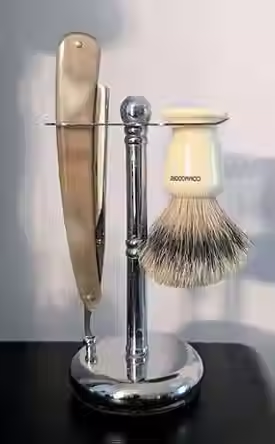
A razor & brush stand is great for making your razor and brush more accessible and to also protect your investment. Brushes should always be stored bristles facing down as this keeps water from pooling inside the handle which will eventually cause the glue to fail.
A stand also provides a secure place for your razor to be stored keeping it out of any water and lessens any chances of it getting knocked to the floor.
Shave Cream & Soap
Soaps
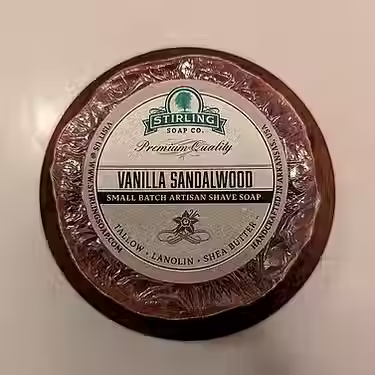
Shave soap comes in a puck and is very similar to most bar soaps. It is denser and slicker than shave creams and takes a bit more work to get it to lather due to the density. It also provides more cushion than creams. Some find that soap dries their skin out more than creams, but the higher-end soaps will have additives such as tallow and conditioners that mitigate this.
Shave soap lasts longer than creams and is usually less expensive, especially in the long run.
Cream
Creams are not hard like soaps, so they don't take as much work to build up a lather. Those who prefer cream say it doesn't dry out your skin as much as soap, but again, this can be mitigated by using higher-end soaps.
Pre-Shave Oil
Many people feel that pre-shave oils make for a better shave, others say they see no difference, so you'll need to decide for yourself.
Pre-shave oil is applied before lathering with either soap or cream. It acts as a protective barrier that allows the razor to glide better. It also softens facial hair, making it easier to cut. Some natural additives, such as essential oils or castor oil, make the shave more soothing and add some antimicrobial properties.
Apply it to your face and work it in a bit. Let it sit for about a minute or two before applying shave cream. This is a good time to strop your razor.
Strop
A straight razor needs to be stropped before and after every shave. As you use a straight razor, it begins to get a wire edge that makes the razor less effective at cutting. Stropping the razor before shaving straightens out this wire edge to ensure a comfortable and effective shave.
Most strops have both a linen and a leather side. The linen is more coarse, or aggressive, and is used before the leather, although some tend to forgo using the linen.
Before shaving: I usually do about three swipes on linen, then about 50 on leather.
After shaving: I do about three to four swipes on leather to clean any detritus off the cutting edge (this helps prevent pitting).
Hones

If you decide to maintain your own razors, you will need one or more hones, often called stones. A 12k finishing hone may be all that you need. About a dozen swipes on this hone every three to four months should keep your razor going strong for years. These finishing hones run about $130.
If you are going to be doing more extensive work to antique store razors you will need a larger assortment of hones, such as:
-
320
-
1000
-
3000
-
5000
-
8000
-
12000
On which hone you begin your honing progression depends on the initial condition of the razor.
Some people forgo hones and maintain their razors using pasted strops.
Alum Block
An alum block is a natural mineral bar made of potassium alum and it is applied to the face directly after shaving. It has antiseptic and astringent properties, meaning that it helps fight any infection that might be caused by a nick or scrape. Additionally, it helps in closing pores and eases razor burn.
Aftershave
A good aftershave will re-hydrate the skin after shaving and add a bit of microbial protection. There are creams, gels, and liquids.